Clean typography, restrained palettes, and confident scale define our minimalist wedding table numbers. Choose from black-and-white modern table numbers with serif or sans-serif typography, contemporary chic numbers in single-accent palettes, modern minimalist numbers designed for printing on clear acrylic, or simple numbered cards for the cleanest reception aesthetic. Print double-sided so every guest at the table can see the number from any seat - the standard format is 4x6 or 5x7, displayed in clear acrylic stands or printed directly on vinyl-cut acrylic blocks. Designed to coordinate with minimalist menus, place cards, and seating charts as a unified day-of stationery suite, every template is fully editable in our free browser-based editor and downloads as print-ready PDF, JPEG, and PNG files.
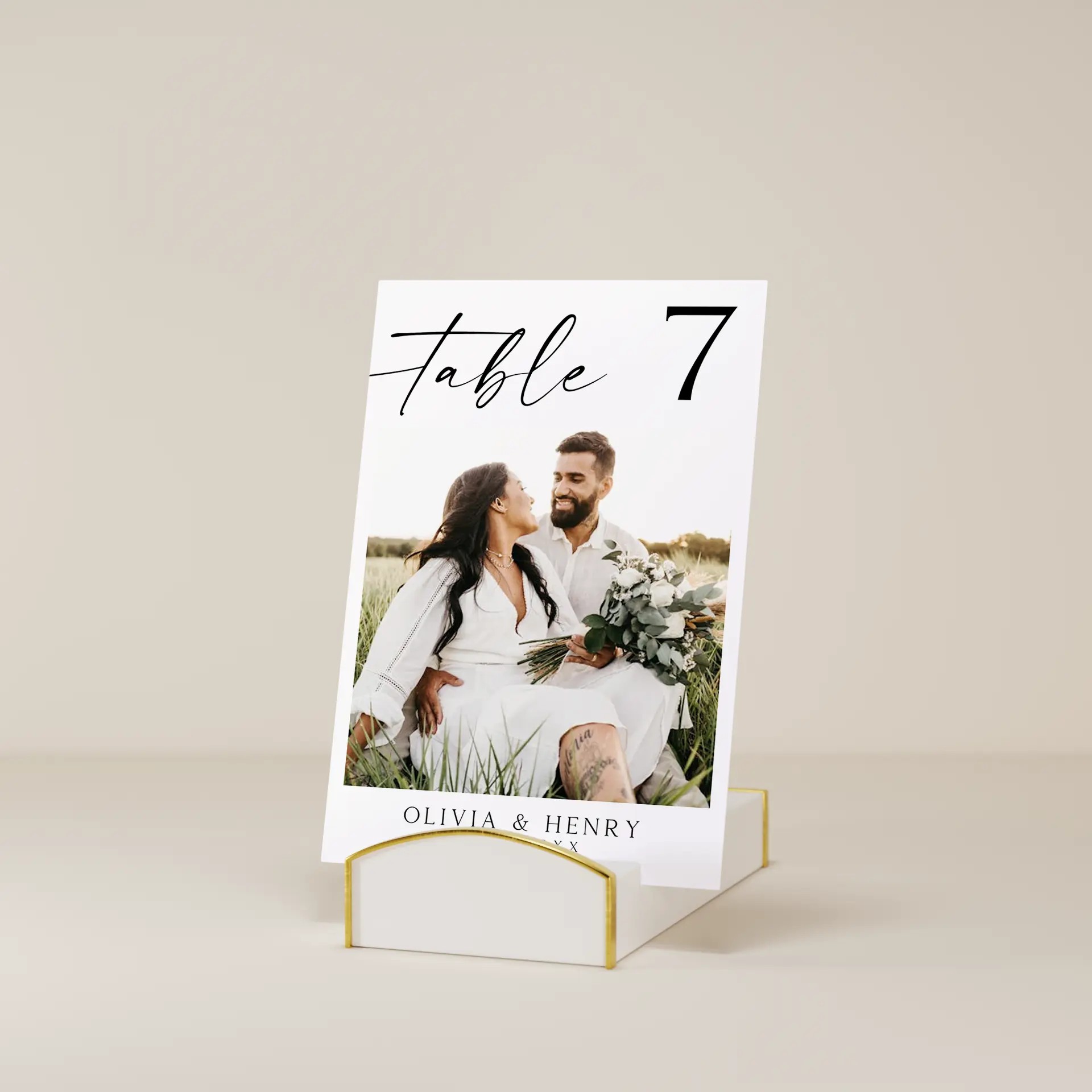
Our minimalist wedding table number templates are built around clean numeric typography, restrained palettes, and confident scale. Choose from modern minimalist table numbers with sleek serif or sans-serif numerals, simple numbered cards for the cleanest reception aesthetic, contemporary chic table numbers in monochromatic palettes, black-and-white modern numbers with high-contrast typography, or clean numeric designs sized for clear acrylic display stands. Whether you are looking for table numbers to print on cardstock and display in a frame, on clear acrylic for the iconic modern minimalist look, or for double-sided printing so every guest at every table can see the number, every template is fully editable in our free browser-based editor and downloads as print-ready PDF, JPEG, and PNG files. Print at home as flat cards or send the digital files to a print shop for acrylic production.
Clear acrylic with charcoal or black vinyl numbers is the iconic minimalist choice for wedding table numbers - more deliberately modern than printed cardstock, more affordable than custom-engraved alternatives, and visually consistent with modern minimalist seating charts and bar signs. Two acrylic production options: clear acrylic blocks with vinyl-cut numbers attached (a modern minimalist standard - the acrylic provides the visual lift while the typography reads cleanly), or printed acrylic cards with the number printed directly on the surface (more affordable, also reads as deliberately modern). Cost ranges: vinyl-cut acrylic blocks $8-$25 per number (most expensive but most distinctive), printed acrylic cards $4-$12 per number, cardstock displayed in a clear acrylic frame $2-$6 per number (most affordable, reads as minimalist when the frame is clear or has a thin metal edge). Most modern minimalist weddings use 8 to 20 table numbers depending on guest count - the per-number cost difference scales meaningfully across that range. For destination weddings or weddings with budget constraints, printed cardstock in clear acrylic frames captures most of the minimalist visual effect at a fraction of the cost.
Most modern minimalist weddings stick with simple sequential numbers (1, 2, 3, 4) for the cleanest aesthetic - the numbers themselves are the design, and any additional content reduces the deliberate minimalism. But some couples use personal numbers as a subtle minimalist alternative to elaborate themed table names: the year the couple met (e.g., 2018), the date of their first date (e.g., June 14), the address number of their first apartment together (e.g., 247), the month and day of the wedding date itself (e.g., 09.21), or numbers significant to the couple's relationship (e.g., the highway number where they had their first long road trip together). The personal numbers convention reads as warm and intentional without compromising the minimalist aesthetic - guests who notice the pattern appreciate the subtlety. The convention works best when the numbers form a deliberate pattern across the reception: ten table numbers reading 2014, 2016, 2018, 2020, 2022 tells a coherent story; ten random numbers without pattern reads as confused. For very minimalist weddings, sequential numbers 1, 2, 3 are usually the strongest choice - personal numbers add a layer of meaning that some couples want and some find unnecessarily decorative.
Browse all wedding table numbers by aesthetic. For matching minimalist day-of wedding stationery, see our minimalist wedding menus, minimalist wedding place cards, and minimalist wedding seating charts.
Standard minimalist table number sizes are 4x6 inches or 5x7 inches, printed double-sided so every guest at the table can see the number from any seat. The smaller 4x6 size works for elegant minimalist weddings where the table number is intended to be unobtrusive; 5x7 works for weddings where the table number serves as a small visual feature. Substrate options: clear acrylic blocks with vinyl-cut numbers ($8-$25 per number, most distinctive minimalist choice), printed acrylic cards ($4-$12 per number, also reads as deliberately modern), heavy cardstock displayed in a clear or thin-metal-edge acrylic frame ($2-$6 per number, most affordable while still reading as minimalist). For destination weddings, the cardstock-in-frame option travels better than acrylic blocks - acrylic is heavy and fragile during transit. Most modern minimalist weddings use 8 to 20 table numbers depending on guest count, so the per-number cost difference adds up across the reception.
For most modern minimalist weddings, simple sequential numbers (1, 2, 3, 4) are the strongest choice - the numbers themselves are the design, and any additional content reduces the deliberate minimalism. But personal numbers can work as a subtle minimalist alternative: the year the couple met (2018), the date of their first date (June 14), the address number of their first apartment together (247), the wedding date itself (09.21). The personal numbers convention reads as warm and intentional without compromising the minimalist aesthetic. The convention works best when the numbers form a deliberate pattern across the reception (e.g., ten tables reading 2014, 2016, 2018, 2020, 2022 tells a coherent story; ten random numbers reads as confused). If you choose personal numbers, brief the seating chart and the venue staff so they understand the table layout - personal numbers can complicate guest navigation if not paired with a clear seating chart.
Print table numbers double-sided so they are visible from both sides of a long rectangular table or from multiple sides of a round table. For round tables (the most common reception layout), single-sided table numbers work because the number sits at the center of the table and rotates as guests look around - but double-sided is still the cleaner choice. For long rectangular farmhouse-style tables (common at modern minimalist receptions), double-sided table numbers are essential - guests at one end of the table cannot see a single-sided number facing the other end. Another consideration: table number height. Cards displayed in a frame should sit 6 to 8 inches above the table surface to be visible above floral centerpieces and place settings. Acrylic blocks with vinyl-cut numbers can be shorter (3-5 inches) because they sit on the table itself with the numbers reading from a low angle. Test the visibility from a guest's seated perspective before the reception begins.
Yes - matching is essential for visual cohesion across the full wedding stationery suite. If your wedding invitations were minimalist with black-on-white typography and a charcoal accent, your wedding table numbers should use the same typography family, the same charcoal accent, and the same restrained palette. The table numbers sit at every table for the entire reception (4 to 6 hours of continuous guest visibility) - they are one of the highest-impression pieces of stationery at the wedding. Cohesion with the rest of the suite is essential because guests see the table numbers more times than almost any other piece. Many couples buy matching invitation suites + day-of stationery suites together specifically to ensure this cohesion across the entire wedding journey. The repeating typography from invitation through table number creates one of the strongest visual through-lines in the modern minimalist wedding aesthetic.